Gallura: what to see in one day
The Gallura region, in north-eastern Sardinia, combines a rugged coastline with granite landscapes and a rural hinterland dotted with small villages. From Porto Taverna, many places of historical, cultural and natural interest can be reached in around an hour by car, making them ideal for a day trip during your stay.
From the 1960s onwards, the development of the Costa Smeralda under the vision of the Aga Khan helped establish Gallura as one of the Mediterranean's best-known holiday destinations. Alongside this more recent history, the region preserves much older traditions and landmarks, from the Nuragic civilisation and the rural stazzi, settlements to the inland villages that continue to reflect Gallura's cultural identity.
Three day trips from Porto Taverna to explore Gallura
| If you are looking for… | Suggested itinerary |
|---|---|
| Gallurese history and traditions | San Pantaleo + Pedres Castle + Giants' Grave |
| Historic villages and granite landscapes | Tempio Pausania + Aggius + Luras |
| Nature and outdoor activities | Monte Nieddu + Rio Pitrisconi |
San Pantaleo, Pedres Castle and the Giants' Grave
Why choose this itinerary
This itinerary offers an introduction to some of the key stages in Gallura's history, from the Nuragic civilisation to the medieval period, before reaching one of the region's most distinctive inland villages.
Who this itinerary is best suited for
- First-time visitors exploring inland Gallura
- Travellers interested in local history and traditions
- Those looking for a day trip with limited driving
Driving times from Porto Taverna
- Porto Taverna → San Pantaleo: approximately 35 min
- San Pantaleo → Pedres Castle: approximately 30 min
- Castello di Pedres → Su Monte 'e S'Abe Giants' Tomb: approximately 5 min
Total driving time
Approximately 2 h
First stop: San Pantaleo
San Pantaleo is one of Gallura's most recognisable villages and is often referred to as the "artists' village" thanks to its long-established community of studios, galleries and exhibition spaces. The historic centre is built around the main square, framed by granite buildings and the distinctive rock formations that characterise this part of Gallura.
On Thursday mornings, generally from April to October, the village hosts its weekly market, featuring local crafts, regional produce and the work of local artists. On other days of the week, the galleries and workshops in the historic centre remain open to visitors.
One of the village's most recent additions is La Capsula del Tempo ("The Time Capsule"), a small exhibition space on Via Ozieri created to preserve stories, memories and the local heritage of San Pantaleo.
Second stop: Pedres Castle
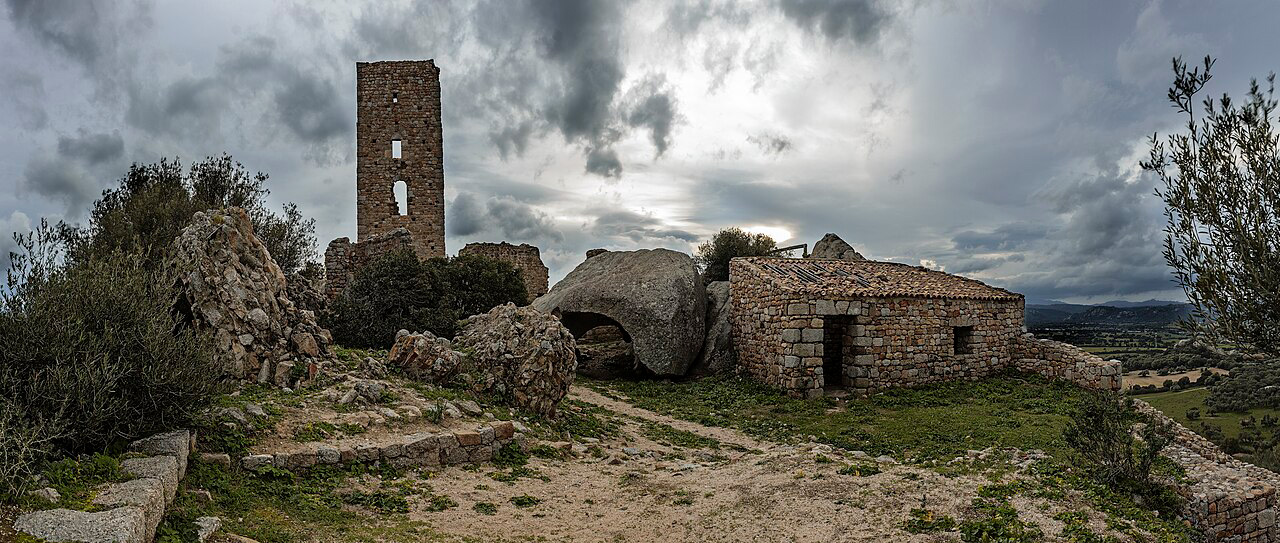
Standing on a hill overlooking the Gulf of Olbia, Pedres Castle was built between the late 13th and early 14th centuries during the Pisan period. A short walking trail leads to the remains of its defensive walls and main tower, offering an insight into the strategic role the fortress once played in controlling the surrounding area.
Third stop: Su Monte 'e S'Abe Giants' Tomb
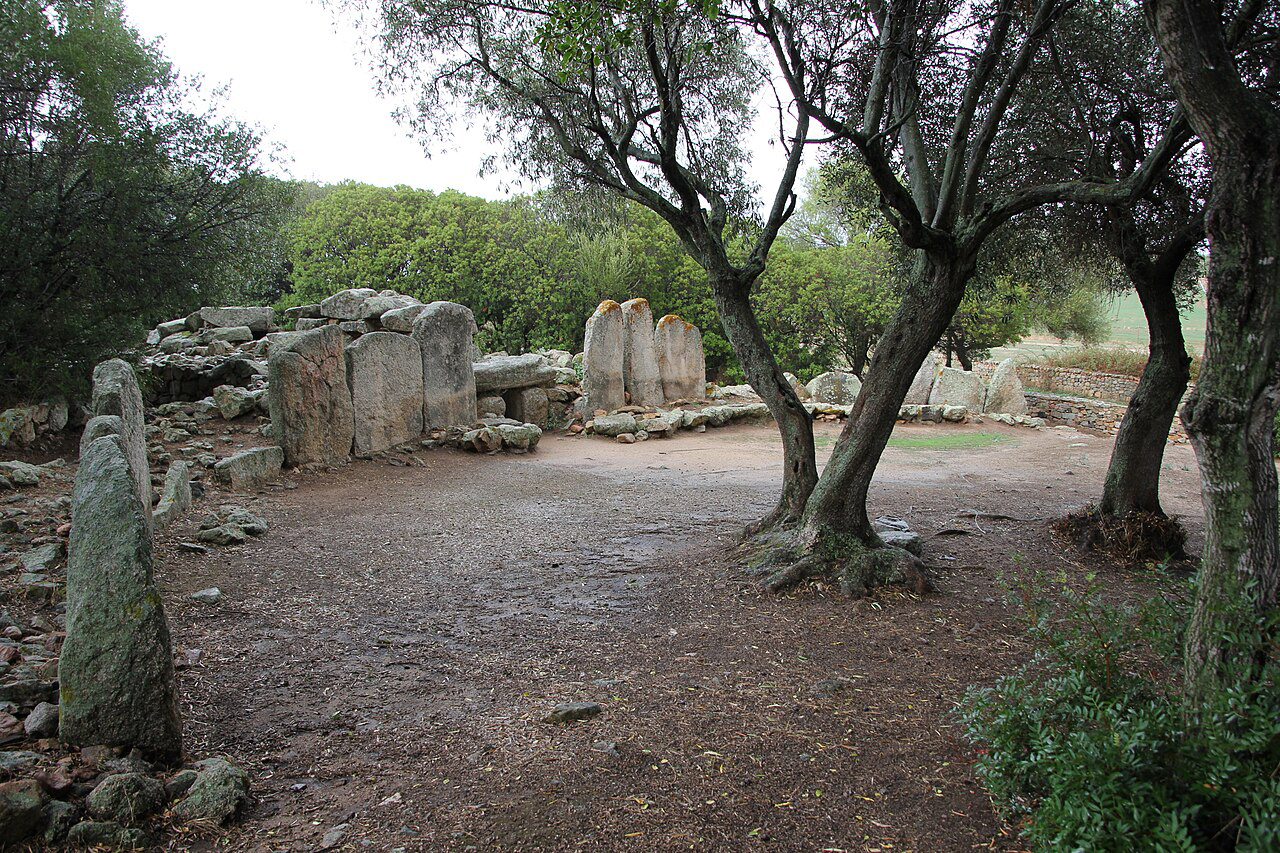
Among the most significant examples of Nuragic funerary architecture in Gallura, the Su Monte 'e S'Abe Giants' Tomb is notable for its large semicircular forecourt (exedra) and central stele. The site can be visited in a short time and provides a clear introduction to one of the oldest chapters of Sardinia's history.
Tempio Pausania, Aggius and the Ancient Olive Trees of Lake Liscia
Why choose this itinerary
This itinerary explores some of the defining features of inland Gallura. Tempio Pausania and Aggius share a strong architectural identity shaped by granite, local traditions and centuries of rural life. A short detour to the ancient olive trees near Lake Liscia completes the day with one of the island's most remarkable natural landmarks.
Who this itinerary is best suited for
- Visitors who enjoy historic villages
- Photography and landscape enthusiasts
Driving times from Porto Taverna
- Porto Taverna → Tempio Pausania: approximately 1 h 15 min
- Tempio Pausania → Aggius: approximately 10 min
- Aggius → Ancient Olive Trees of Lake Liscia: approximately 40 min
Total driving time
Approximately 3 h 10 min
First stop: Tempio Pausania
Known as the "City of Stone", Tempio Pausania preserves a medieval historic centre built almost entirely of granite. Highlights include St Peter's Cathedral, the Teatro del Carmine and Piazza Faber, dedicated to Fabrizio De André and created in collaboration with architect Renzo Piano. The 1930s railway station is also worth visiting. The building combines Liberty and Art Deco architectural elements, while its waiting room displays paintings by Giuseppe Biasi, one of the leading Sardinian artists of the twentieth century. The station is also the departure point for the Trenino Verde service to Luras, a heritage railway journey through the landscapes of inland Gallura aboard restored historic carriages.
Second stop: Aggius
Just a few kilometres from Tempio, Aggius has retained the character of one of inland Gallura's historic villages. Granite houses and narrow streets reflect a long-standing textile tradition that remains an important part of the village's identity today. Aggius is home to the MEOC – Oliva Carta Cannas Ethnographic Museum, the largest ethnographic museum in Sardinia, offering an insight into Gallurese traditions, crafts and rural life. The Museum of Banditry explores another distinctive aspect of the region's social history.
Just outside the village lies Valle della Luna (Valley of the Moon), locally known as Piana dei Grandi Sassi, a landscape characterised by enormous granite boulders sculpted over thousands of years by wind and weather.
Third stop: The ancient olive trees of Lake Liscia
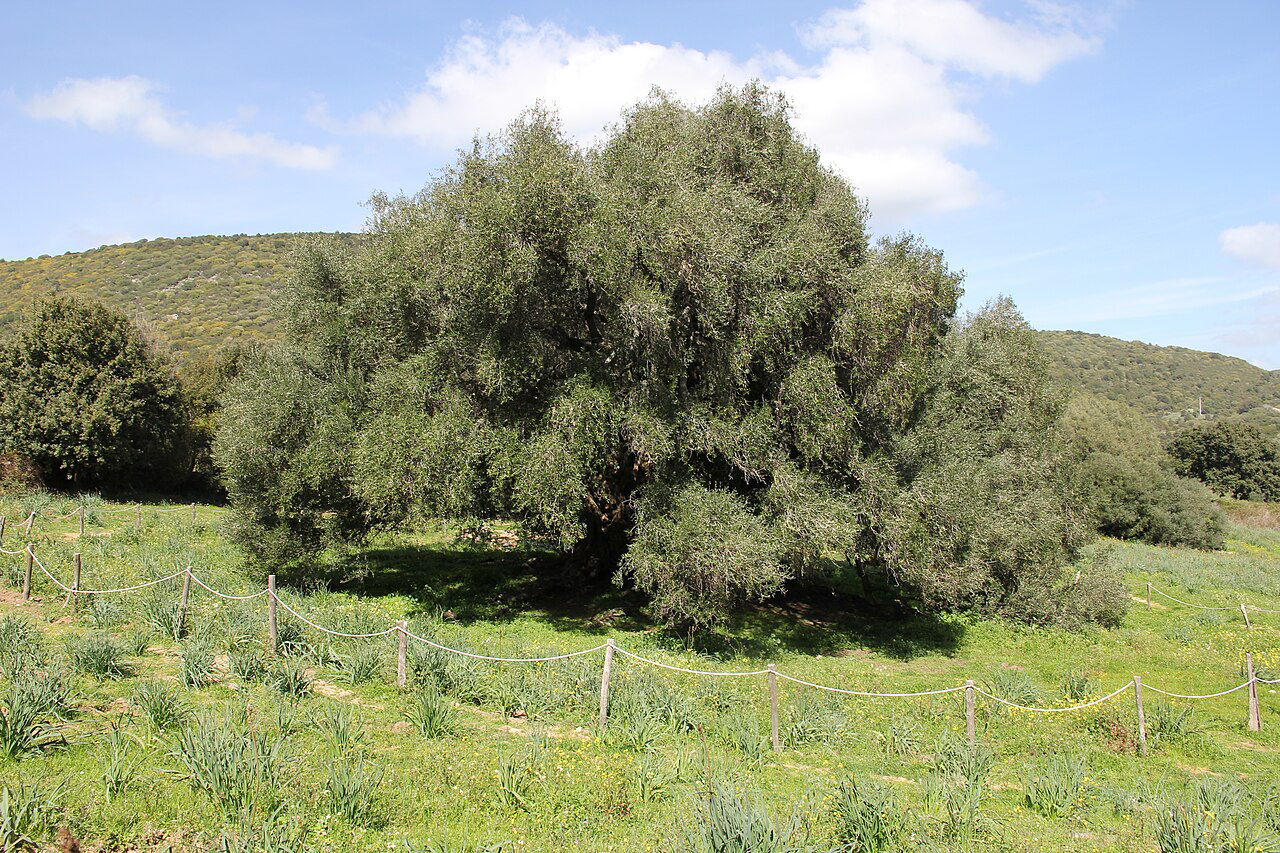
Near the village of Luras, in the locality of Santu Baltolu – Carana, stands S'Ozzastru, one of Sardinia's best-known monumental wild olive trees. The wild olive is the natural form of the cultivated olive tree and is a characteristic species of the Mediterranean landscape. Current estimates suggest that S'Ozzastru is between 3,000 and 4,000 years old. The tree stands around 14 metres tall and its trunk measures approximately 11 metres in circumference. It is considered one of the oldest living trees in Europe.
Padru, Monte Nieddu and Rio Pitrisconi
Why choose this itinerary
Rio Pitrisconi, the natural pools such as Poiu Pitriolu, and the waterfalls of Scala Taddata make this itinerary one of the most accessible ways to explore the Gallurese landscape actively, rather than simply observing it.
Who this itinerary is best suited for
- Hikers and nature lovers
- Travellers looking for a more active day
- Families with older children used to walking
Driving times from Porto Taverna
- Porto Taverna → Padru: approximately 30 min
- Padru → area di Monte Nieddu: approximately 20 min
- Padru → Rio Pitrisconi (Straulas area): approximately 20 min
Total driving time
approximately 1 h 30 min
First stop: Padru and the culture of the stazzi
Padru preserves traces of Gallura’s rural tradition linked to the stazzi, traditional farmstead settlements made up of a house and the surrounding land. Built mainly from granite, the stazzi were for centuries the centre of family and working life in the countryside. Nearby is the Santu Miali archaeological complex, which includes a necropolis with remains dating back to the 6th century AD.
Second stop: Monte Nieddu
At 971 metres above sea level, Monte Nieddu is one of the main reliefs of south-eastern Gallura. The area is crossed by numerous paths following old routes once used by charcoal burners and woodcutters. Its landscape includes holm oak, cork oak and juniper woodland, as well as a varied fauna. In addition to the golden eagle, visitors may spot mouflon, wild boar and foxes; among the birds of prey found here are also buzzards, goshawks and sparrowhawks. Among the routes on the Padru side of the mountain, one worth noting is the path from the Sos Pantamos spring to a panoramic terrace overlooking the Gallurese hinterland and the coast.
Third stop: Rio Pitrisconi
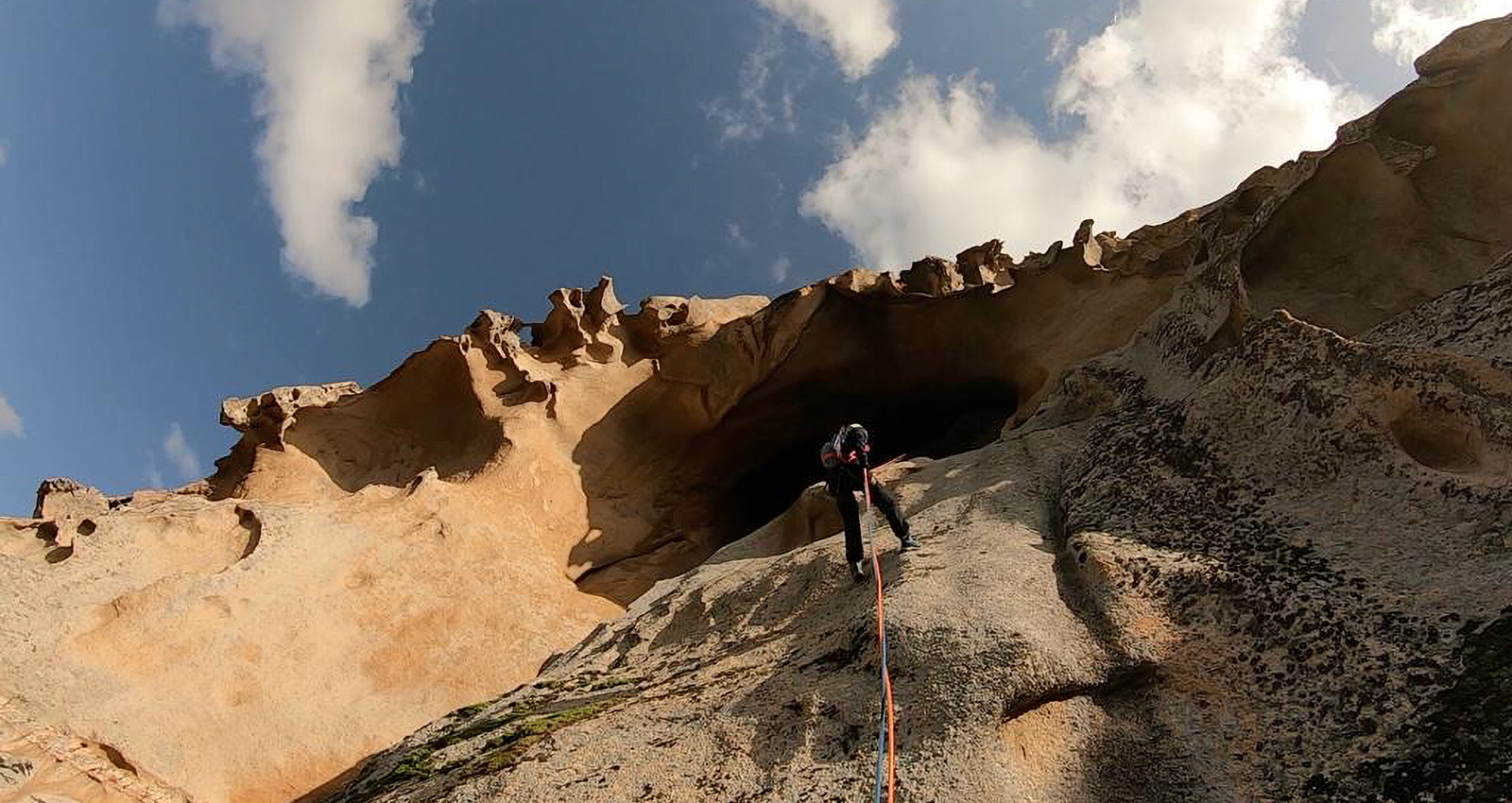
On the side of Monte Nieddu facing the San Teodoro coast lies the main access to the Rio Pitrisconi routes, among the most popular nature trails in Gallura. Rio Pitrisconi runs through a landscape shaped by the typical pink granite of Gallura, gradually carved by water erosion. Along the route you will find small waterfalls, narrow rocky sections and several natural pools, some of which allow for a short stop during the walk. One of the best-known points in the area is the natural pool of Poiu Pitriolu, often included in guided itineraries.
Those looking for a quieter outing can choose one of the trekking routes in the area, with varying levels of difficulty and duration. For a more active option, Rio Pitrisconi is one of the main canyoning locations in north-eastern Sardinia, with routes combining stream walking, rope descents and crossings through natural pools.
For canyoning excursions, technical equipment is normally provided by the organisers. For trekking, it is always advisable to wear footwear suitable for uneven ground and to carry enough water, especially during the warmer months.
How to reach Rio Pitrisconi
The main reference point for reaching the area is Stazzo Pitrisconi — the former Forest Service barracks — where both hiking trails and organised canyoning activities begin. The road leading to the stazzo is unpaved and is not recommended unless you have a 4x4 vehicle. From Straulas, off-road shuttle services are available and take visitors directly to the beginning of the natural area.
A stay in Porto Taverna makes it easy to combine time on the coast with day trips into inland Gallura. With just 11 Junior Suites, our boutique hotel offers a peaceful base for exploring historic villages and the natural landscapes of north-eastern Sardinia.